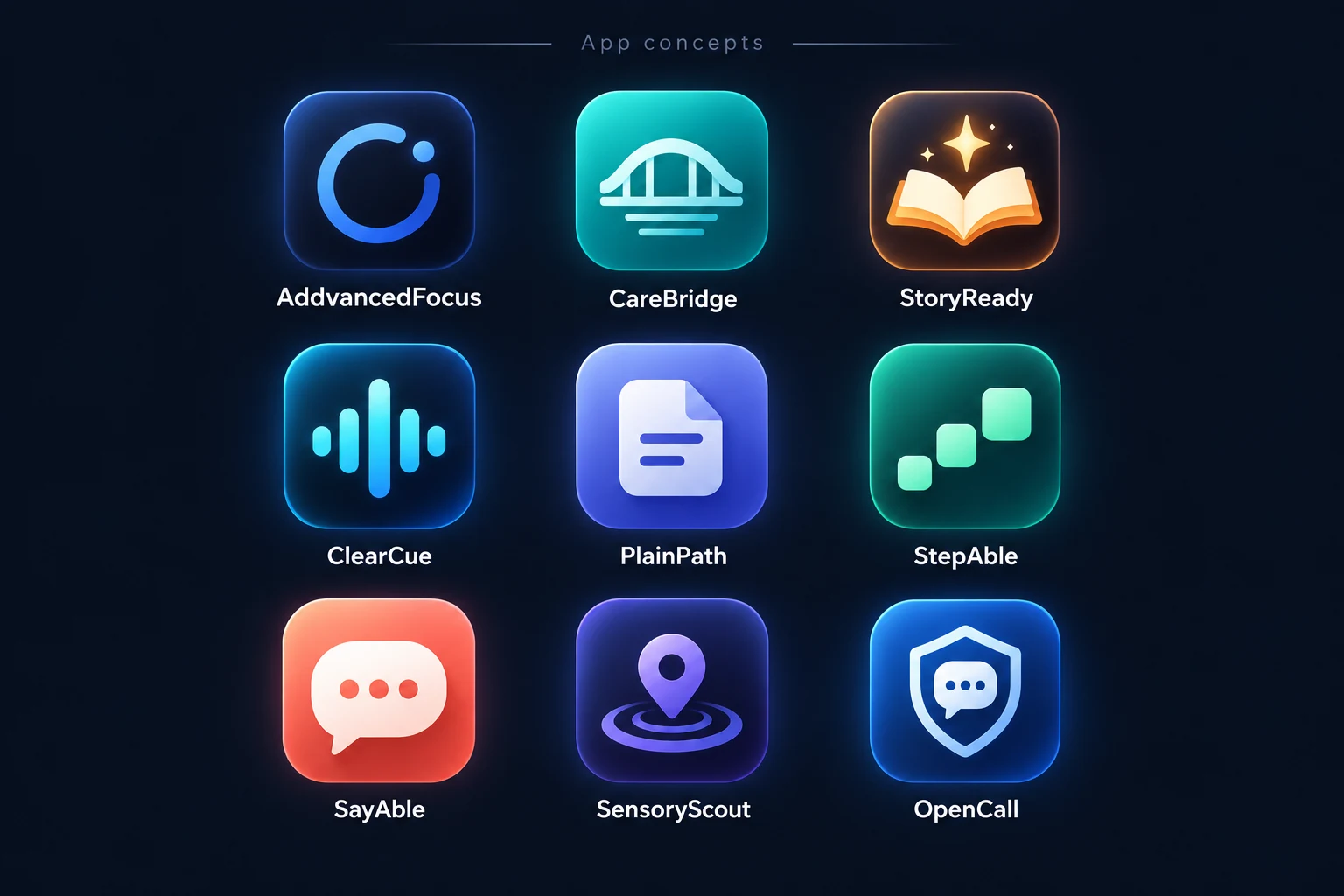
THE FUTURE PRODUCT FAMILY
Different needs.
One shared commitment.
Future products under development, beginning with early concepts. Each addresses a distinct everyday challenge. The capabilities below are planned; these products are not available to use, and release dates have not been set.
Family care coordination
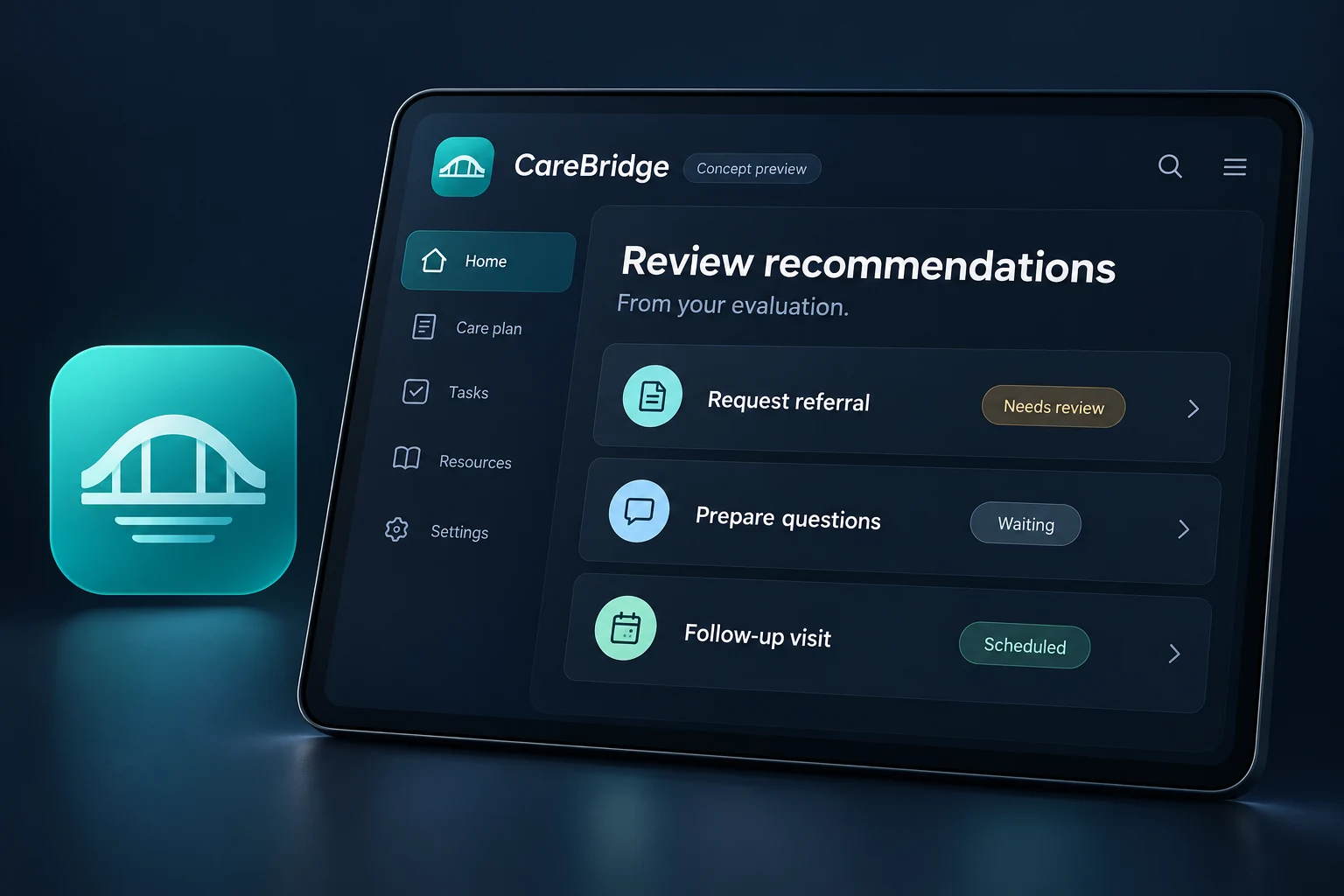
CareBridge
Less paperwork. More progress.
Future product · Concept developmentAn AI family assistant being designed to help parents coordinate evaluations, therapies, school services, and the follow-ups that connect them.
Planned capabilities & example for CareBridge
Planned capabilities
- Organize developmental evaluations, IEPs, IFSPs, and therapy reports.
- Surface recommendations, outstanding referrals, and follow-up actions.
- Track deadlines, appointments, and services in one chronological history.
- Summarize progress across providers and prepare questions for appointments.
- Draft emails requesting evaluations or additional services for parents to review.
- Highlight possible services or accommodations for families to investigate.
An example of the intended experience
A parent uploads a developmental evaluation. The intended experience would turn its recommendations into a reviewable checklist, help track which services have been scheduled, and draft requests for outstanding follow-ups.
Design consideration
Parents review recommendations and approve communications. Eligibility and services would need to be confirmed with the relevant providers or agencies.
Visual stories & transitions
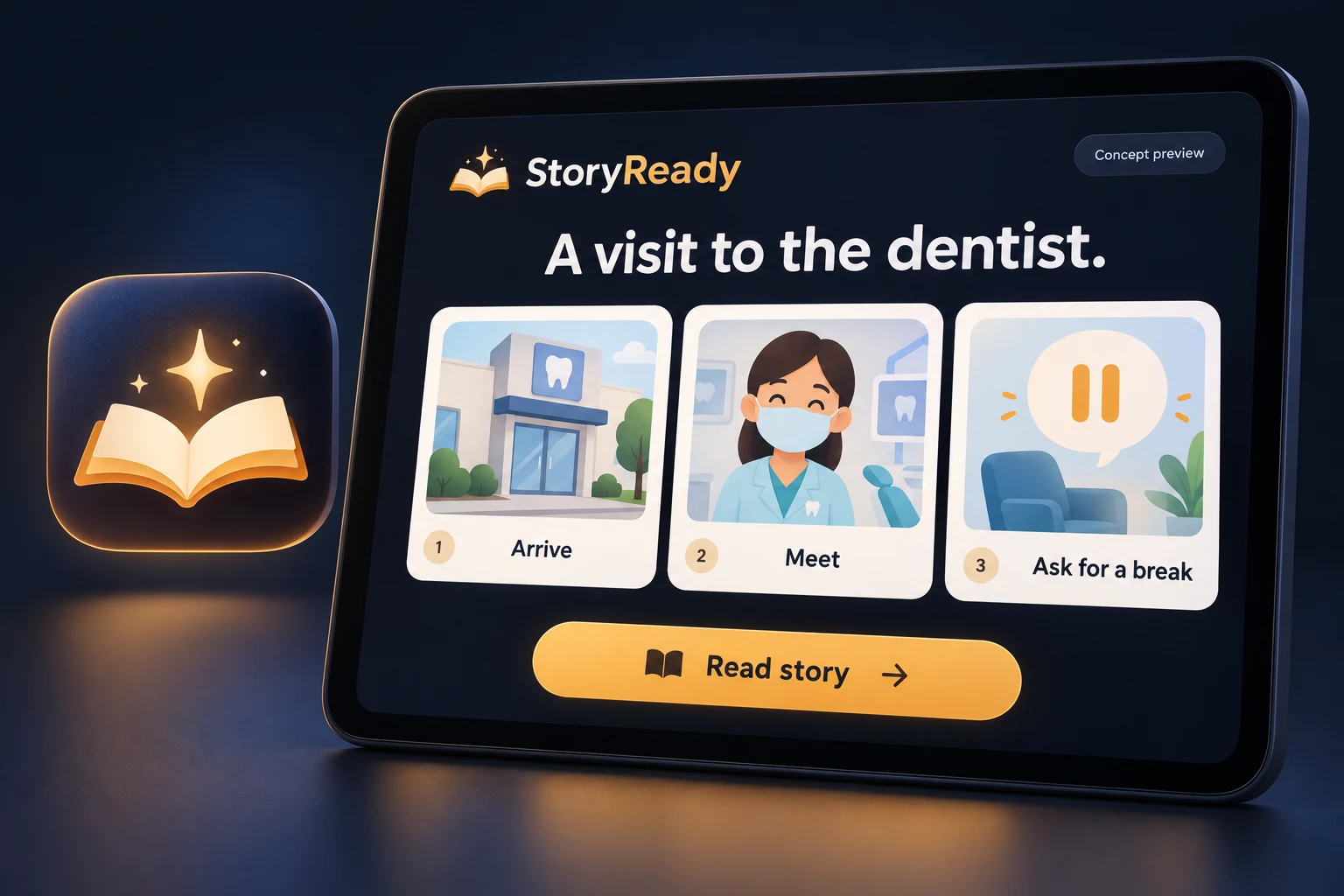
StoryReady
Make the unfamiliar feel familiar.
Future product · Concept developmentPersonalized visual preparation for children who benefit from predictable routines, clear sequences, and support with unfamiliar experiences.
Planned capabilities & example for StoryReady
Planned capabilities
- Generate visual stories and illustrated routines from a simple description.
- Keep child and family characters consistent across stories.
- Prepare for preschool, doctor visits, travel, haircuts, and other transitions.
- Explain emotions and social situations with accessible illustrations.
- Offer visual countdowns and first-then schedules.
- Support familiar recorded voices, multiple languages, and adaptable visual complexity.
An example of the intended experience
Before a dentist visit, a family could create a short story showing the likely sequence, the people their child may meet, and how to ask for a break.
Design consideration
Families would review stories for accuracy and fit. Preparation should make room for uncertainty and a child’s choices, including asking for a pause.
Speech comprehension & follow-through
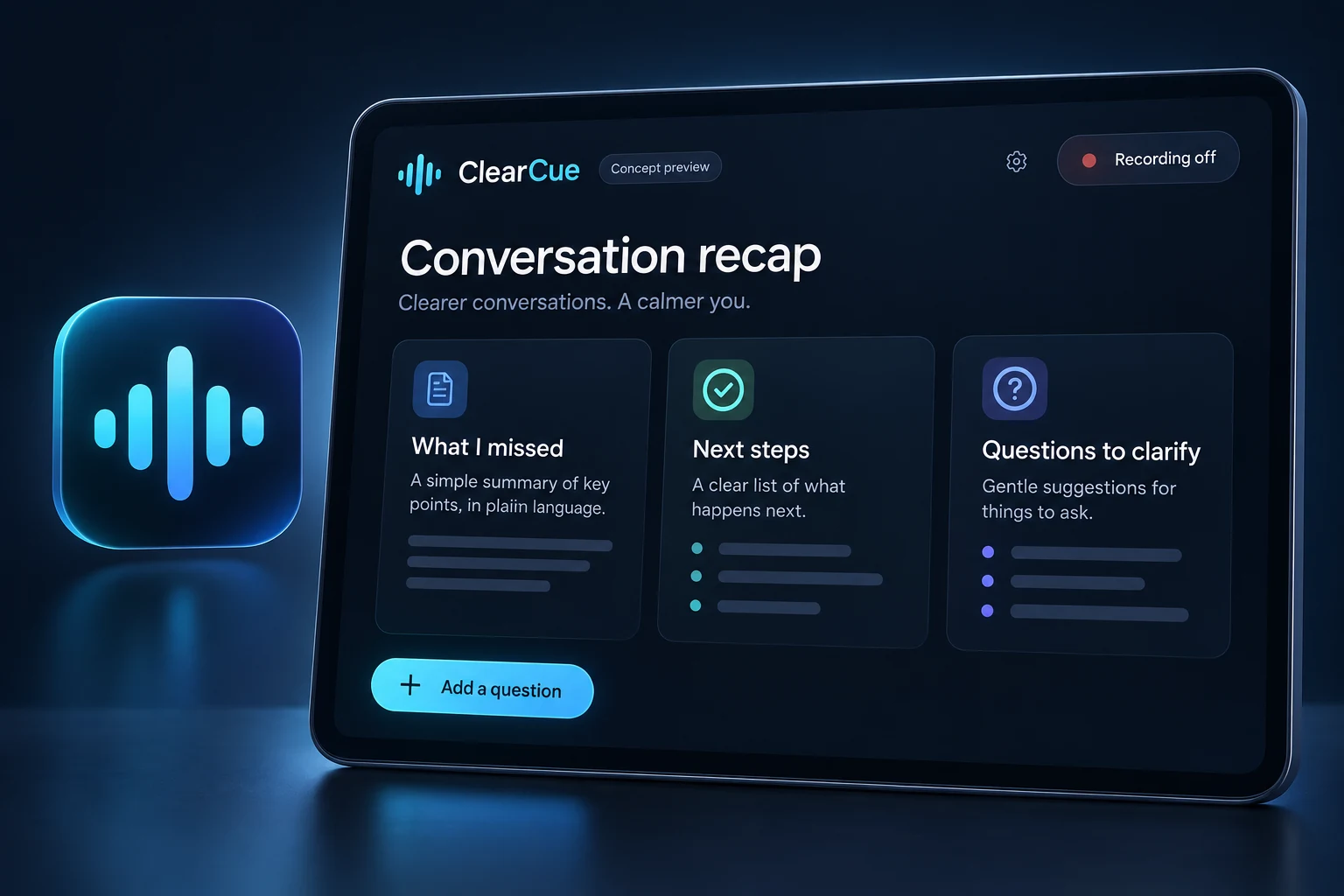
ClearCue
Hear it. Understand it. Remember it.
Future product · Concept developmentAn auditory processing assistant focused on understanding and remembering spoken information, including for people with ADHD, auditory processing differences, or hearing difficulties.
Planned capabilities & example for ClearCue
Planned capabilities
- Provide real-time transcription and accessible conversation summaries.
- Identify instructions, commitments, and important details.
- Offer a “What did I miss?” review of recent conversation.
- Turn complex verbal instructions into manageable steps.
- Make confusing passages easier to revisit and clarify.
- Suggest follow-up questions and optional visual reminders.
An example of the intended experience
After an appointment, someone could review a concise summary, find the next steps, and see which instructions need clarification with the provider.
Design consideration
Recording would require appropriate consent and clear controls. Transcripts and summaries can be wrong; important details should be checked against the conversation.
Written information & action
PlainPath
Make complicated things understandable.
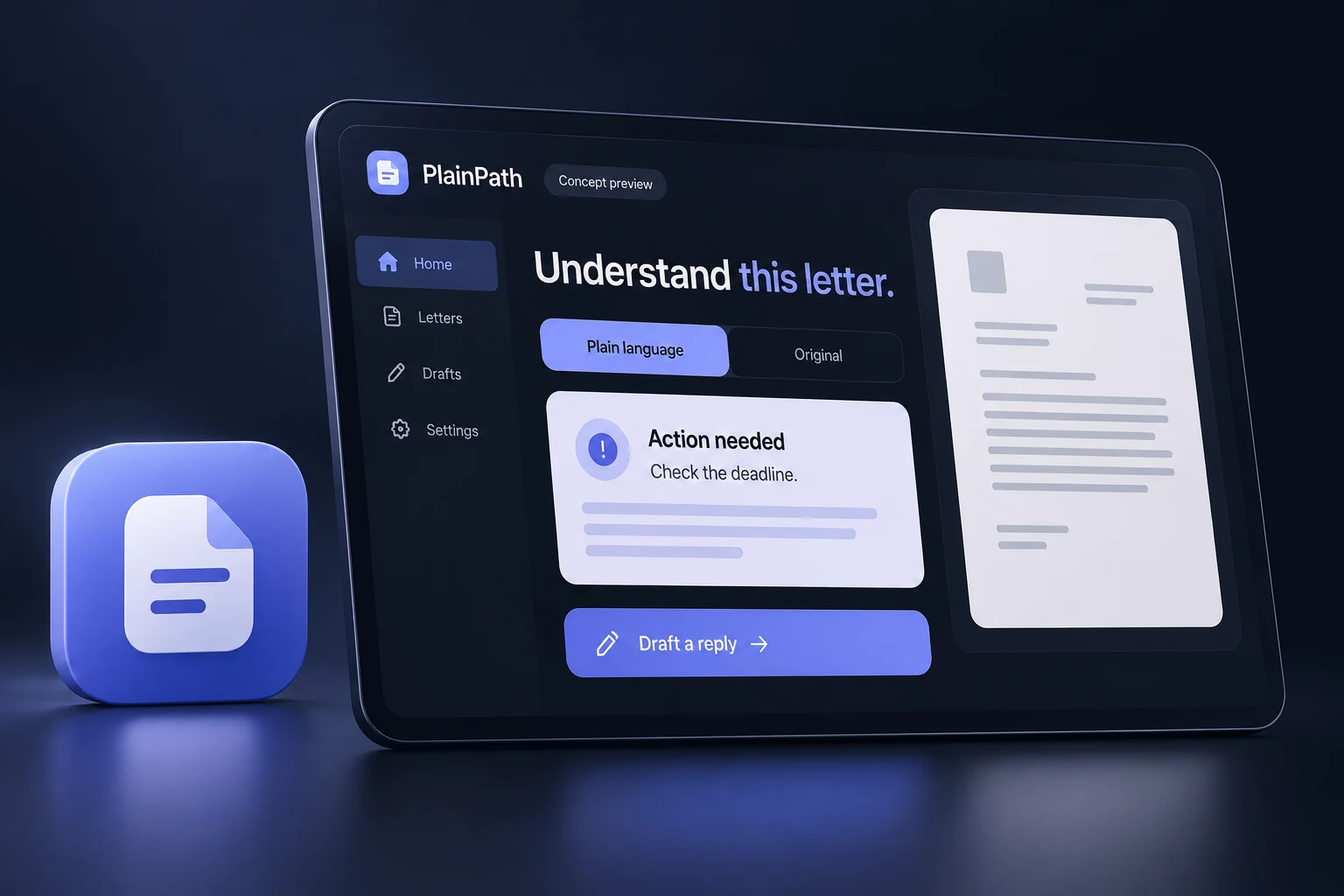
Future product · Concept developmentA cognitive accessibility assistant that would help people understand complex documents and follow through on what those documents ask them to do.
Planned capabilities & example for PlainPath
Planned capabilities
- Photograph or upload letters, forms, and instructions.
- Explain complex language and unfamiliar terms in accessible wording.
- Highlight required actions and stated deadlines.
- Turn information into step-by-step checklists and reminders.
- Offer read-aloud support, adjustable reading levels, and visual formatting.
- Draft responses for the user to review and approve.
An example of the intended experience
An insurance letter could become a plain-language explanation with its stated deadline and a checklist of possible next steps tied to the original document.
Design consideration
Explanations should preserve access to the original wording and distinguish stated facts from suggestions. Important deadlines and requirements would need verification.
Independent living skills
StepAble
Independence, one step at a time.
Future product · Concept developmentAn independent-living coach being conceived for people with intellectual or developmental disabilities, autism, and other cognitive support needs.
Planned capabilities & example for StepAble
Planned capabilities
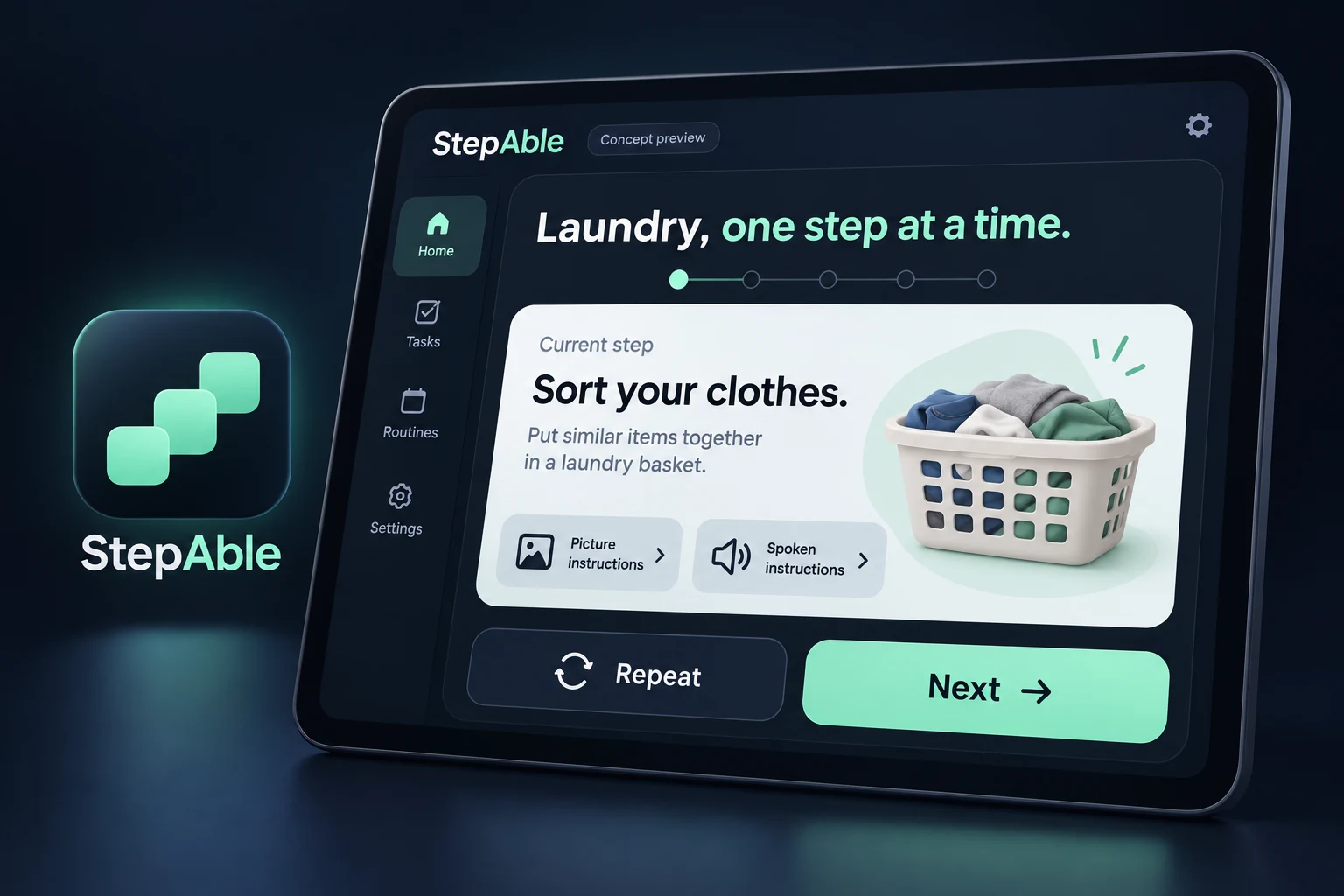
- Break cooking, cleaning, laundry, and organization into understandable steps.
- Offer picture-based and spoken instructions.
- Explore optional camera-based assistance for recognizing objects.
- Adapt the pace and complexity of guidance.
- Help prepare for errands and using public transportation.
- Offer optional caregiver support with explicit permissions.
- Reduce prompts as the person becomes more confident.
An example of the intended experience
A laundry routine could guide someone through sorting, loading, choosing settings, and putting clothes away, with additional visual guidance when requested.
Design consideration
The direction is to develop with input from people with disabilities and relevant specialists. StepAble would support how to do a task; AddvancedFocus focuses on choosing and starting it.
Communication & expression
SayAble
Your voice. Your choices.
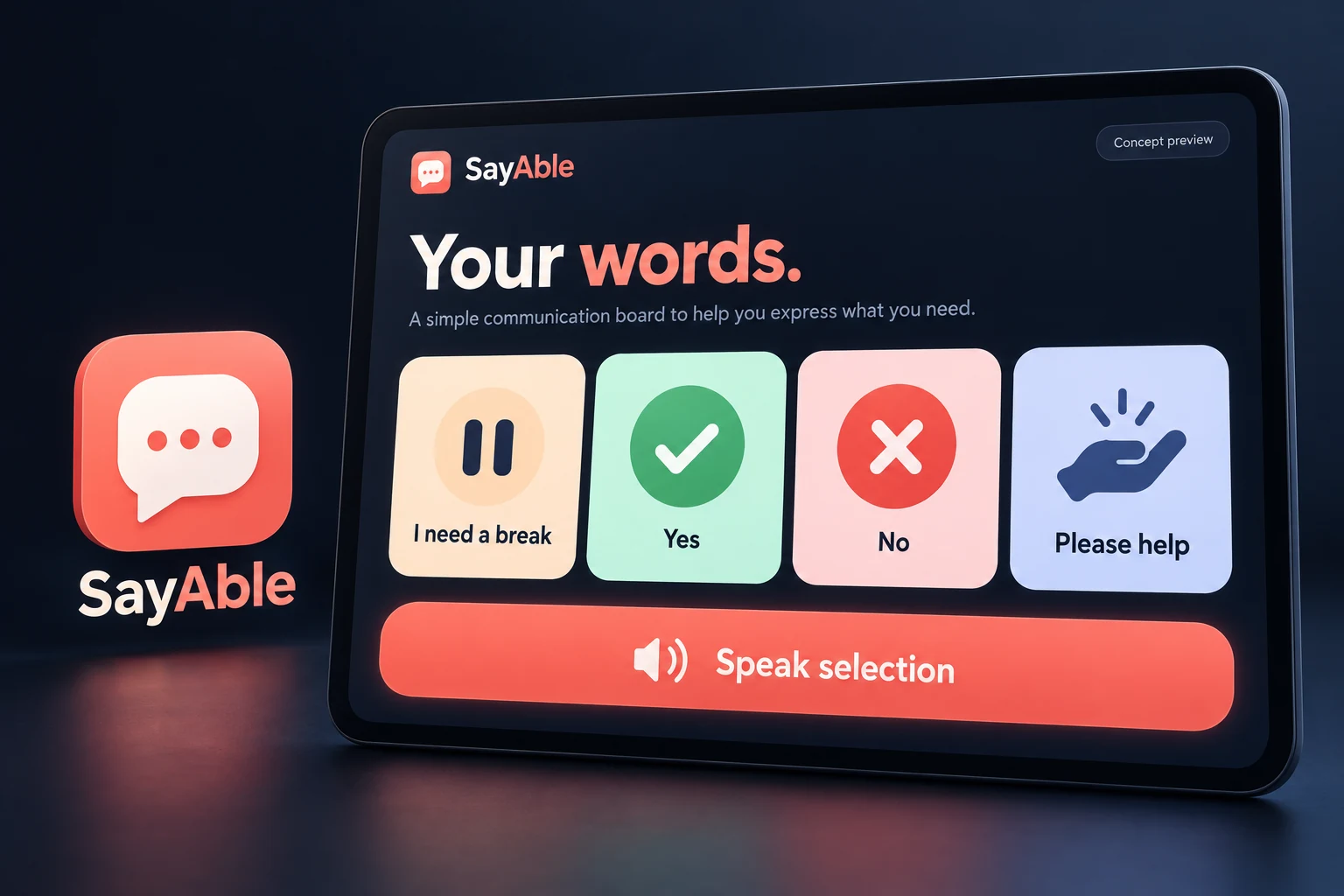
Future product · Concept developmentAn AI-assisted communication concept for people who have difficulty speaking, with an emphasis on personal expression and control over every message.
Planned capabilities & example for SayAble
Planned capabilities
- Provide picture-based communication boards and personalized vocabulary.
- Suggest contextually relevant phrases for the user to choose.
- Offer text-to-speech and multilingual communication.
- Adapt interfaces to motor and cognitive access needs.
- Explore optional personal voice technology.
- Support compatible accessibility input methods.
An example of the intended experience
At a restaurant, someone could quickly choose a phrase to ask for a menu, check ingredients, or communicate a preference.
Design consideration
AI would suggest, never independently speak on someone’s behalf. Development would need to be shaped with AAC users and speech-language professionals, with communication autonomy at its center.
Sensory access & outings
SensoryScout
Explore the world on your terms.
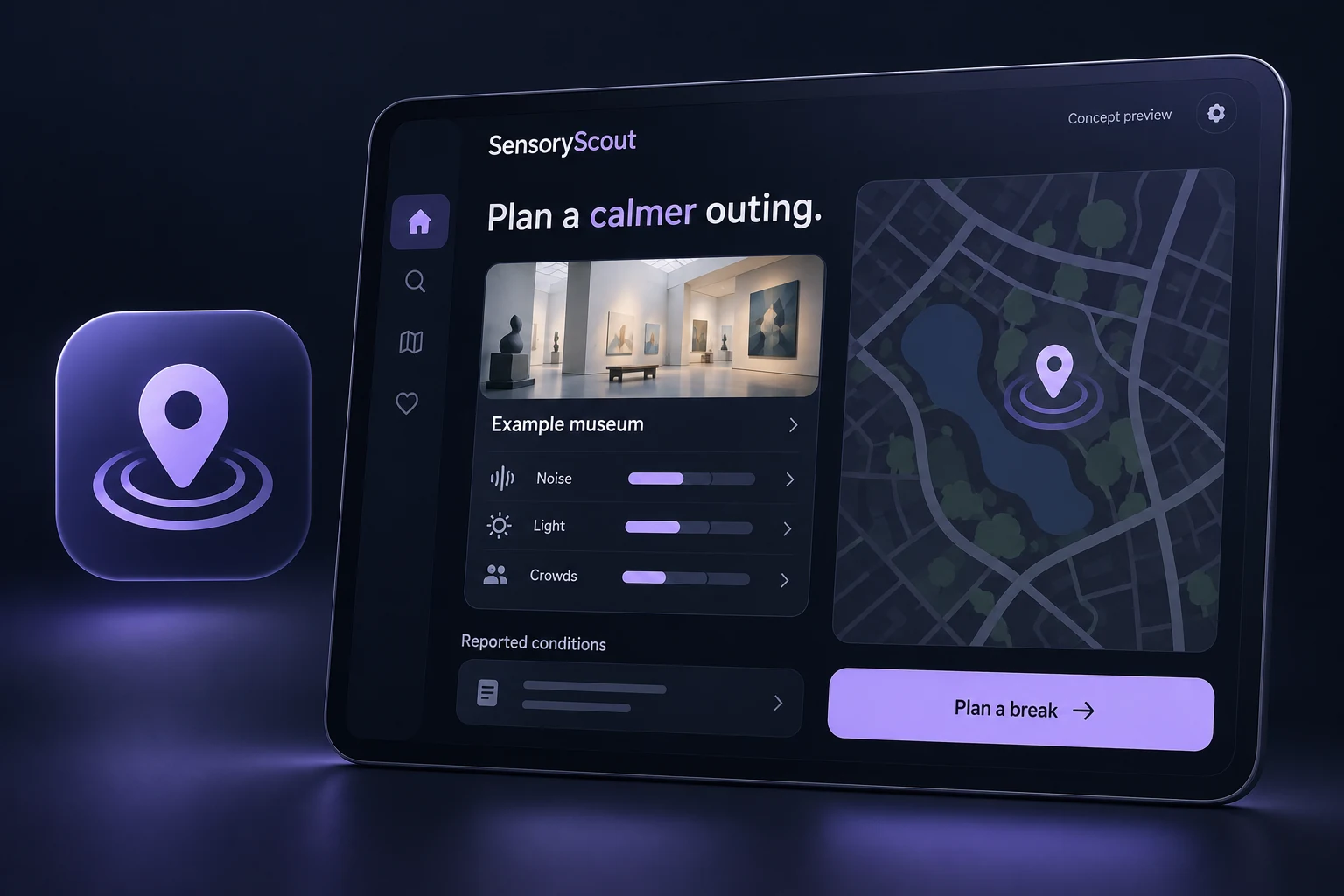
Future product · Concept developmentA sensory accessibility assistant intended to help people plan outings around their preferences for noise, lighting, crowds, and predictability.
Planned capabilities & example for SensoryScout
Planned capabilities
- Discover destinations with available sensory-access information.
- Bring together reports about noise, lighting, and crowd conditions.
- Create personal sensory preferences and outing plans.
- Suggest potentially quieter visiting times and accommodations to request.
- Combine user reports with available environmental information.
- Offer preparation and calming strategies selected by the person using it.
An example of the intended experience
A museum visit could start with a review of reported sensory conditions, possible quieter periods, and a personal plan for breaks.
Design consideration
Conditions change. Reports would need source and freshness information, with uncertainty made clear. A useful service depends on reliable data and participation.
Accessible scam awareness
OpenCall
A clearer pause before you act.
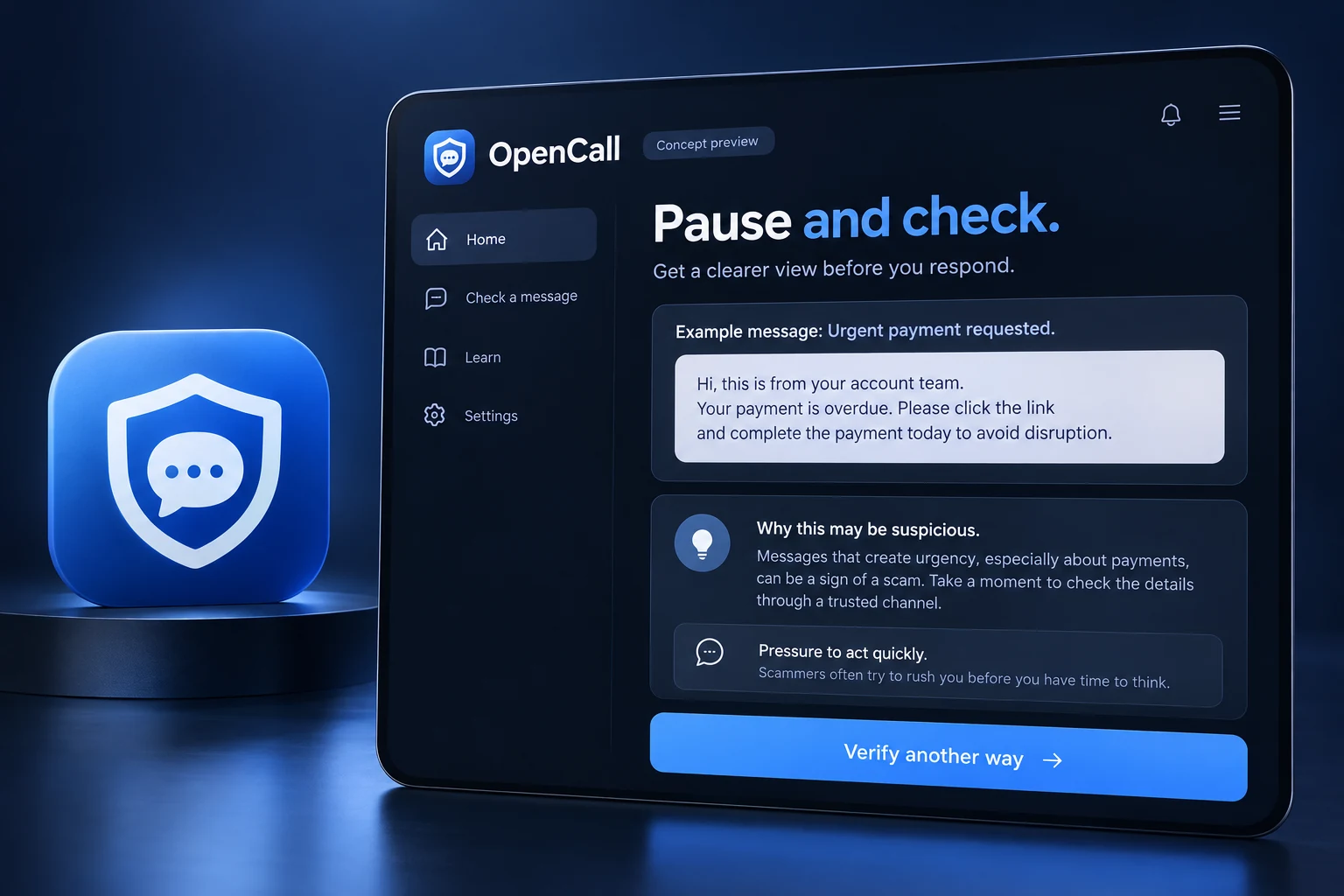
Future product · Concept developmentAn accessibility-focused direction for OpenCall: help people with cognitive support needs recognize potentially fraudulent messages and calls, understand the warning signs, and consider safer next steps.
Planned capabilities & example for OpenCall
Planned capabilities
- Explore checks for suspicious messages and calls.
- Explain warning signs in clear, accessible language.
- Offer practical next steps, such as verifying a request through a known channel.
- Keep the decision with the user rather than automatically acting on a message.
An example of the intended experience
An urgent payment request could be explained in plain language, with its warning signs highlighted and a suggestion to verify the request using independently known contact details.
Design consideration
A scam assessment would be guidance, not a guarantee. The accessibility-focused experience is a future product direction; no detection accuracy or released capability is claimed.