SENSORYSCOUT · SENSORY ACCESS & OUTINGS
Plan the outing
around your needs.
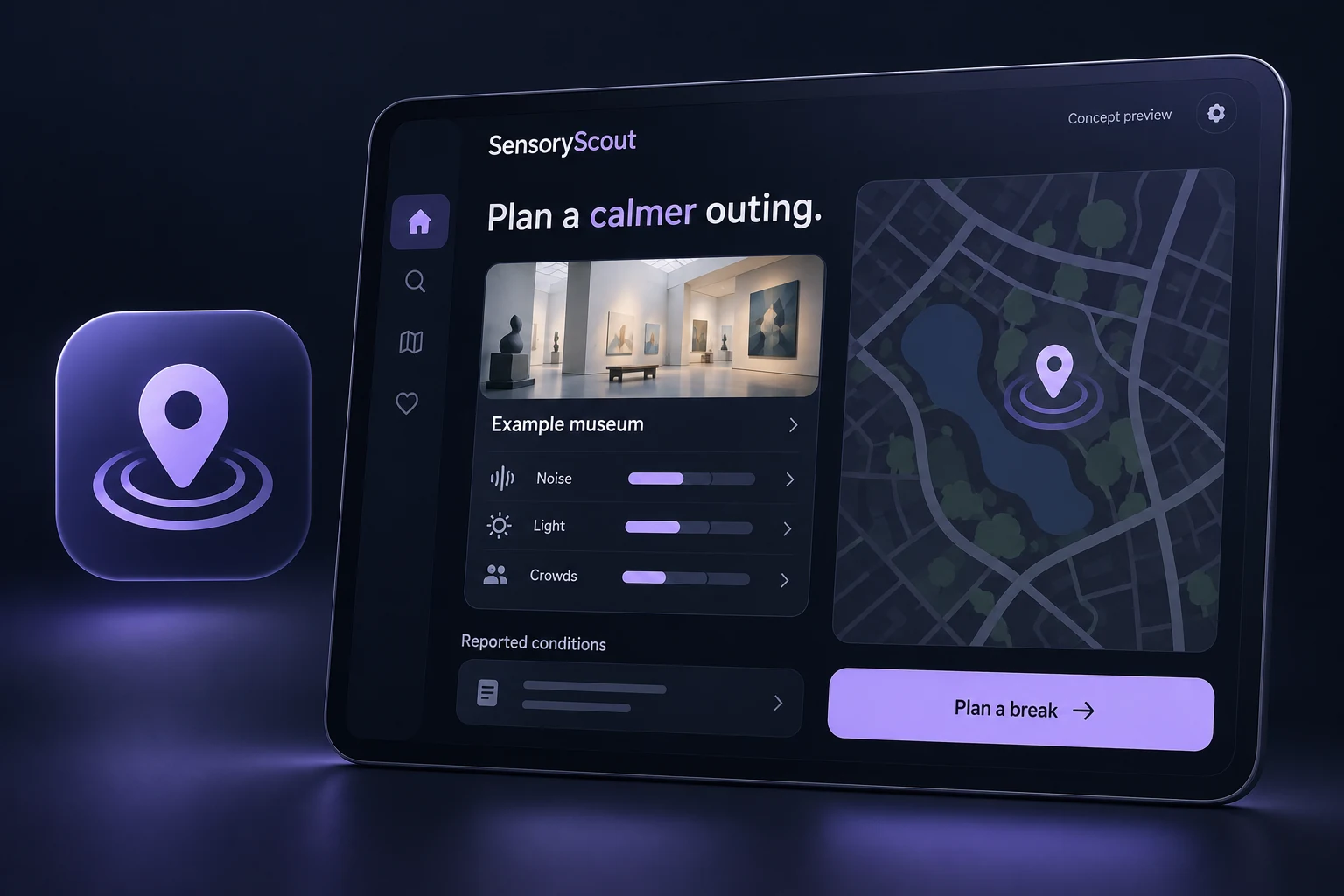
A sensory accessibility assistant intended to help people plan outings around their preferences for noise, lighting, crowds, and predictability.
THE EVERYDAY CHALLENGE
SensoryScout starts
with a real need.
A place described as quiet may be very different at another time. Useful sensory information needs context: who reported it, when they visited, and which conditions mattered to them.
Help people make informed plans using available information, personal preferences, and visible uncertainty.
HOW IT COULD WORK
A thoughtful path
through the moment.
This walkthrough illustrates the intended experience. It describes the product direction, not functionality available on this website.
Describe what matters
Set preferences for aspects such as noise, lighting, crowds, and break opportunities. Needs should be adjustable from one outing to the next.
Review the available picture
Compare reports and available environmental information. The intended experience would show source and freshness details rather than implying guaranteed conditions.
Prepare a flexible plan
Consider possible quieter periods, accommodations to ask about, and user-selected preparation strategies. Keep space for a break or a change of plan.
PLANNED CAPABILITIES
The details
we’re exploring.
- Discover destinations with available sensory-access information.
- Bring together reports about noise, lighting, and crowd conditions.
- Create personal sensory preferences and outing plans.
- Suggest potentially quieter visiting times and accommodations to request.
- Combine user reports with available environmental information.
- Offer preparation and calming strategies selected by the person using it.
ACCESSIBILITY & CONTROL
Designed around
the person using it.
Clear comparisons, predictable navigation, readable reports, and control over sensory preferences would be part of the design direction.
Privacy, affordability, and user autonomy are shared Biro.dev design principles. Product-specific data practices, supported access methods, and any offline capabilities would be explained before public release.
Read our design commitmentsQUESTIONS ABOUT SENSORYSCOUT
A clearer picture.
Would it measure live conditions everywhere?
No. Reliable location information is a development challenge. Live coverage, specific data sources, and participating venues have not been announced.
Would a sensory-friendly label fit everyone?
No. People experience environments differently. The goal is information matched to individual preferences, rather than a universal rating.
Could families prepare a child for the visit?
Preparation is part of the planned direction. A future optional connection with StoryReady could be useful, but cross-product connections are not available today.
When can I use SensoryScout?
SensoryScout is in early concept development. There is no public release date, price, or supported-platform list yet. The next step is to develop and evaluate the intended experience.
HELP INFORM THE DIRECTION
What would make SensoryScout
useful in your everyday life?
Share a challenge, a useful detail, or a question. You do not need to share sensitive personal information.
RELATED PRODUCT DIRECTIONS